


Celebrating the Supermoon: The Story Behind November’s Beaver Moon
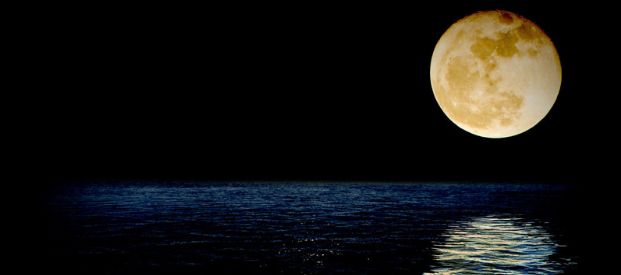
Who hasn’t looked up at the night sky and marvelled at a Moon that seems unusually large and bright? This phenomenon is known as a supermoon, and it tends to occur around three or four times a year. One example is November’s so-called “Beaver Moon”, which can sometimes coincide with a supermoon, creating a particularly impressive lunar display. What exactly is a supermoon? And where does the rather unusual name Beaver Moon come from?
An elliptical orbit
The distance between the Moon and the Earth is constantly changing due to the fact that its orbit is elliptical rather than perfectly circular. A supermoon occurs when a full Moon coincides with the Moon’s closest point to Earth in its orbit (known as its perigee), making it appear noticeably larger and brighter than usual.
According to NASA, a full Moon at its closest point to Earth can appear up to 14 per cent larger and 30 per cent brighter than one at its furthest distance. However, it can be difficult to gauge this with the naked eye. The term “supermoon” was first used in 1979 by the American astrologer Richard Nolle, and it has subsequently become widely used to describe this phenomenon.
Native American traditions
For centuries, people have given names to the full Moons throughout the year, ranging from the Wolf Moon in January to the Flower Moon in May and the Cold Moon in December. Many of these names originated from Native American traditions and were subsequently adopted by European settlers in North America. These names have enjoyed a resurgence in popular culture in recent years.
The Beaver Moon, which takes place in November, owes its name to the fact that this was traditionally the time when beavers would prepare for winter. These little creatures would spend this time building and repairing their dams and lodges before the arrival of the colder weather. Another theory is that November was the time when hunters would set traps for the beavers before the waterways froze over. Alternative names for the November Moon are the Frost Moon or Freezing Moon, but these are much less common.
A gravitational pull
The Moon’s gravitational pull plays a key role in creating the ocean tides, and when the Moon is closer to Earth, this effect becomes slightly stronger. This is why, during a supermoon, we can experience particularly high tides, known as perigean spring tides. The word “perigean” comes from perigee, the term for the Moon’s closest point to Earth in its orbit. The reference to spring is thought to come from the old expression of the tide “springing forth” – nothing to do with the season!
A spectacular sight
The best way to view a supermoon is to look towards the eastern horizon, just after sunset, when the Moon is low on the horizon. It appears particularly impressive at this time due to an effect known as the Moon illusion, which makes the Moon seem larger in comparison to buildings, trees or other features in the landscape. The next time a supermoon is due, why not take a moment to look up at the night sky and enjoy the spectacle?
About the author: Elizabeth Rose

Marketing Manager at Rose Calendars, Elizabeth has many years experience in PR and Marketing, and is extremely committed to sustainability.