


Commemorating the First Ascent of Mount Everest
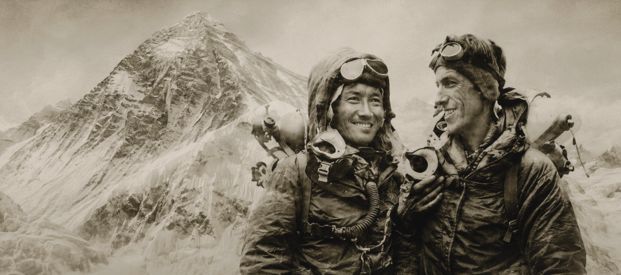
On 29 May 1953, Sir Edmund Hillary and Sherpa mountaineer Tenzing Norgay made history by becoming the first men to reach the summit of Mount Everest. This remarkable feat captured the world’s attention and became one of the key events of the 20th century. This is the story of their epic achievement.
A majestic peak
Rising 8,849m (29,032 ft) above sea level, and situated on the border between Nepal and Tibet, Mount Everest is the highest peak on Earth. Since the birth of modern mountaineering in the 19th century, this majestic peak has captured the imagination of climbers and explorers around the world. Yet by the 1950s, despite numerous expeditions and many lives lost, it remained unconquered. Famously, George Mallory and Andrew Irvine perished on its slopes in their 1924 attempt to reach the summit.
In 1953, however, all this changed, thanks to a British expedition to the Himalayas. Led by Colonel John Hunt, the team included 13 mountaineers and around 30 Sherpa climbers as well as hundreds of local porters. Among the climbers was Edmund Hillary, a beekeeper and high-altitude mountaineer from New Zealand. He was selected after impressing the organisers with his skill and stamina during a 1951 Everest reconnaissance trip. Sherpa mountaineer Tenzing Norgay had already taken part in multiple Everest expeditions, which made him an essential member of the team.
Extreme altitude
After months of planning and preparation, the expedition team departed from Kathmandu in March 1953. Trekking through the Himalayas, they made their way towards Everest Base Camp, arriving in April. The team then spent around six weeks establishing a series of higher camps on the mountain. This involved carrying food, oxygen, tents and equipment up the dangerous slopes of Everest while gradually acclimatising to the extreme altitude. Along the way they encountered avalanches, deep snow, crevasses and freezing temperatures.
The first summit attempt took place on 26 May, by Tom Bourdillon and Charles Evans. They got incredibly close but were forced to turn back due to exhaustion and problems with their oxygen equipment. Although unsuccessful, they helped to pave the way for Hillary and Tenzing to make their assault on the summit three days later.
The death zone
On 29 May, Hillary and Tenzing left their camp at 6.30am and began steadily climbing upwards through deep snow and dangerously thin air. Fighting exhaustion, freezing temperatures and fierce winds, they entered the infamous “death zone”. This is the area above 8,000m on Mount Everest, where oxygen levels are just one-third of what they are at sea level. The human body can no longer recover or function in this state, and this is where the majority of deaths occur on the mountain. The final obstacle facing the pair was a near-vertical 12m rock face, which was later named the Hillary Step. After forcing their way up this icy rock face, they finally reached the summit at 11.30am. Hillary opted for a formal handshake to celebrate, while Tenzing exuberantly hugged his companion. Hillary captured the moment with his camera, before placing a crucifix given to him by John Hunt on the summit, while Tenzing left sweets and chocolates as a Buddhist offering. They both ate some Kendall mint cake, the traditional mountaineer’s staple, and then began the long journey back to camp.
A national celebration
News of the successful ascent was transmitted to London via telegram and arrived in time to be announced on the morning of Queen Elizabeth II’s coronation on 2 June. It prompted a national celebration not just in the UK but around the world. Hillary received a knighthood, while Tenzing was awarded the George Medal. Their extraordinary achievement has inspired many others to follow in their footsteps, and as of December 2025, 7,563 people have reached the summit of Mount Everest. More than 70 years later, Hillary and Tenzing’s ascent remains a defining moment in the history of mountaineering.
About the author: Elizabeth Rose

Marketing Manager at Rose Calendars, Elizabeth has many years experience in PR and Marketing, and is extremely committed to sustainability.